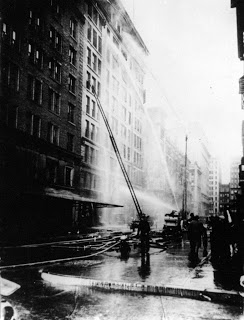
[Photograph of a Broken Fire Escape after the Triangle Shirtwaist Factory Fire,National Records and Administration Archive]
[Immigrant Girls: 1911 Triangle Fire. 1911]
This is an excerpt from a song written in 1911 by an unknown author, in memory of the 146 workers who lost their lives to the Triangle Fire.
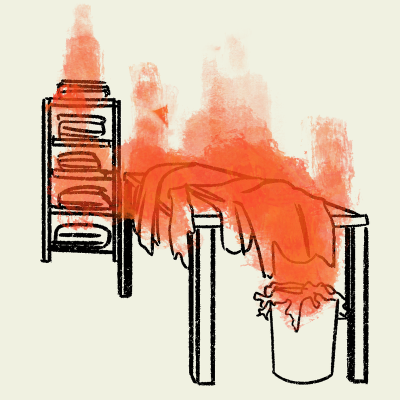
[Andrea Hickey, Buzzfeed, 2018]
The fire started on the 8th floor in a scrap bin and spread quickly inflaming fabric everywhere.
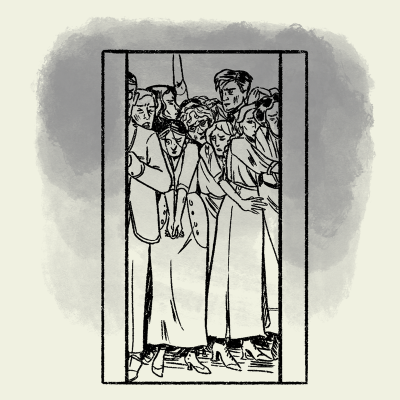
\[Andrea Hickey, Buzzfeed, 2018]
The ninth floor workers who were locked out of the stairwell tried the elevator but it was already jam-packed with the tenth and eleventh-floor workers. In between the confusion, workers plummeted down the elevator shafts after being pushed or accidentally slipping.
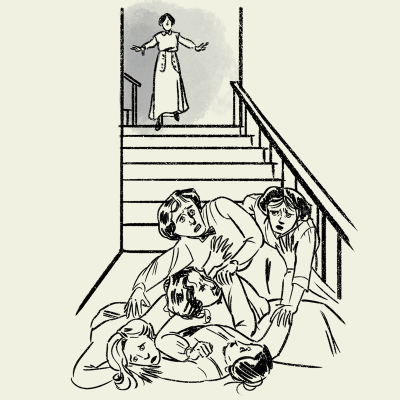
[Andrea Hickey, Buzzfeed, 2018]
The door on the eighth floor was locked but once they were able to get it open it took a while to file out because the door opened inwards. Some people tumbled when rushing down the stairs causing a barricade.
[Photograph of a Broken Fire Escape after the Triangle Shirtwaist Factory Fire,National Records and Administration Archive]
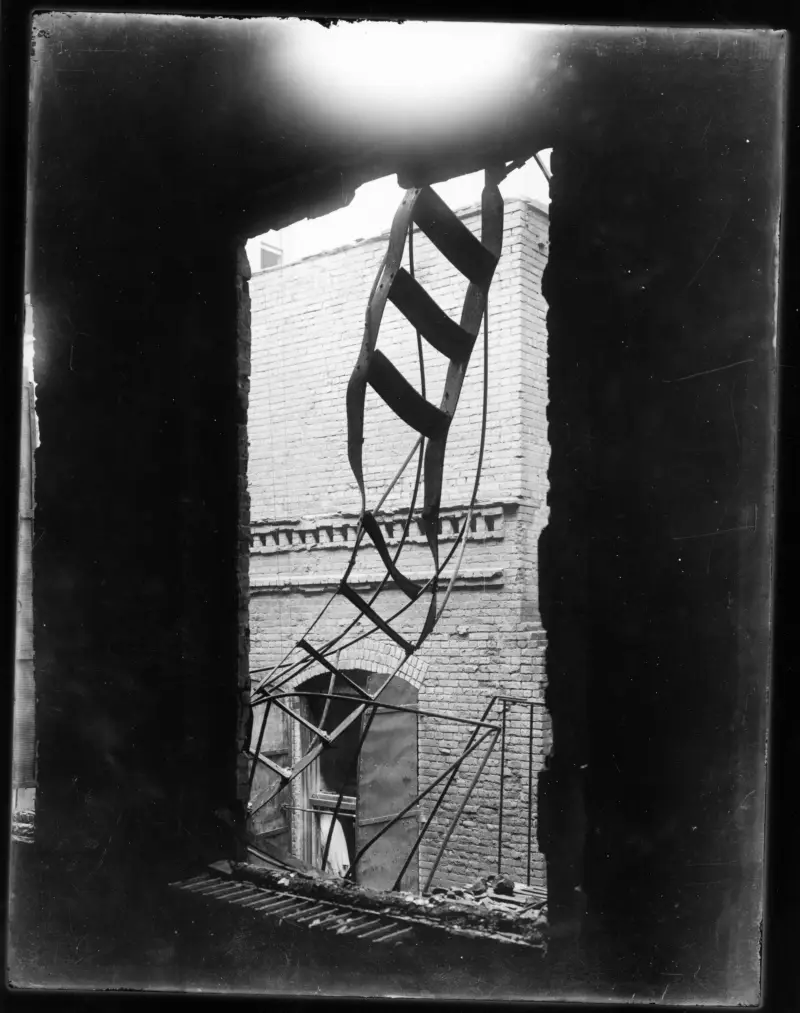
[The Too-Short Ladders, Cornell University, 1911]
The photographs above show the ladders the firefighters were using to get people down from the building that were too short (left) and the broken fire escape exit that collapsed from the weight of the workers trying to escape (right).
[Pauline Pepe, 1986]
This is a recording of Pauline Pepe, a survivor of the Triangle Fire recalling what it was like when she finally escaped the burning building during an interview.
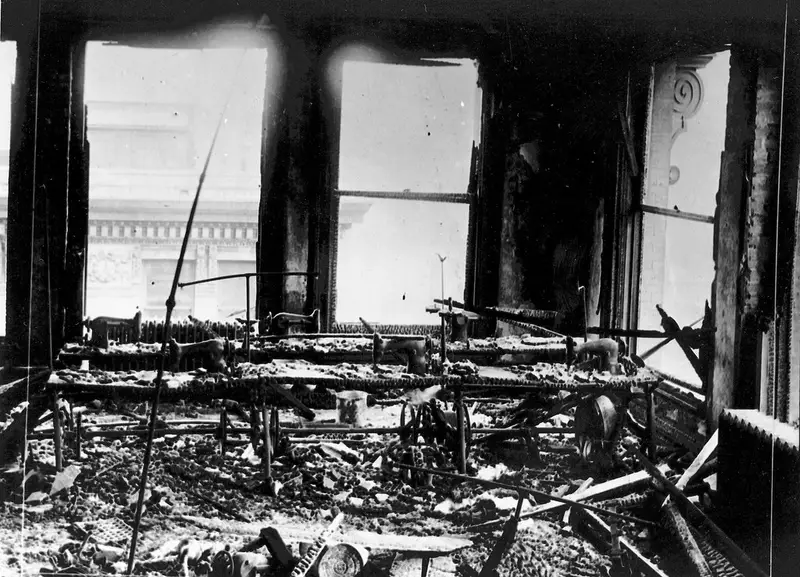
[Browns Brothers, Interior of the Triangle Waist Company Shop in The Asch Building 9th Floor After The Triangle Fire, Flickr, 2011]
Inside of the ninth floor of the Asch Building after the fire.
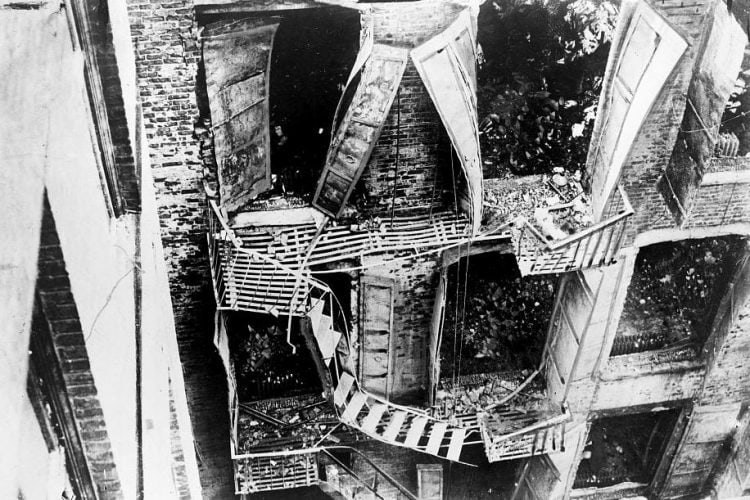
[Clickamericana.com. 1911]
Outside of Asch building after the fire.
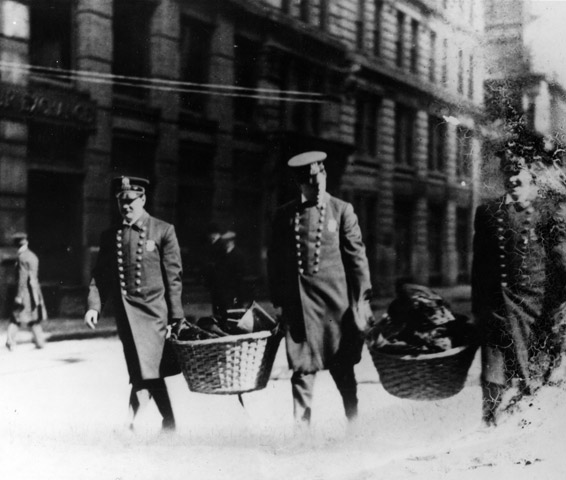
[Firefighters and Police collect Personal Items, Cornell University, 1911]
Firefighters and police carrying salvaged personal items to the 26th street morgue.
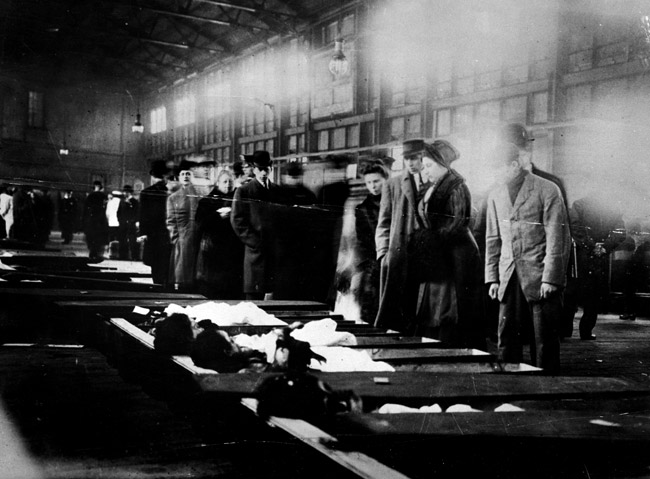
[26th Street Pier Morgue. 1911.]
Citizens searching for their family and friends at the 26th street morgue as sorrowful .
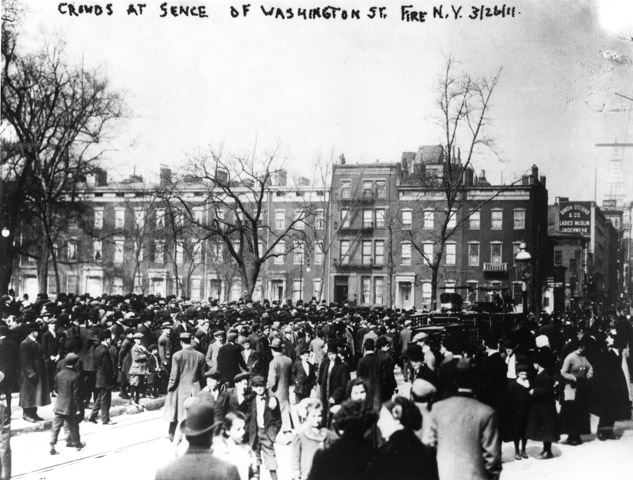
[Crowds at Fence Of Washington St. Fire N.Y.C., Cornell University, 1911]
March 26, 1911 crowds gathered at the sight of the fire in grief trying to face the reality of their lost friends and family.
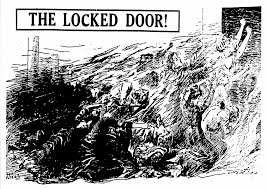
[The Locked Door! 1911]
Young women were trying to escape the burning building on the 9th floor but couldn't because the doors were locked.
The Triangle Shirtwaist Factory owners Issac Harris and Max Blanck were found NOT guilty when charged for manslaughter even though they locked the doors so the women could not escape the building. Later, to end other lawsuits they paid $75 to each family which was a fraction of the $400 insurance paid. The Judge even apologized to them for the inconvenience of having to pay the fine.
One of the main reasons the owners were found innocent was because the Triangle factory complied with the majority of the regulations put in place originally. Though the regulations in place seemed like "a tragedy waiting to happen" (Cosker).
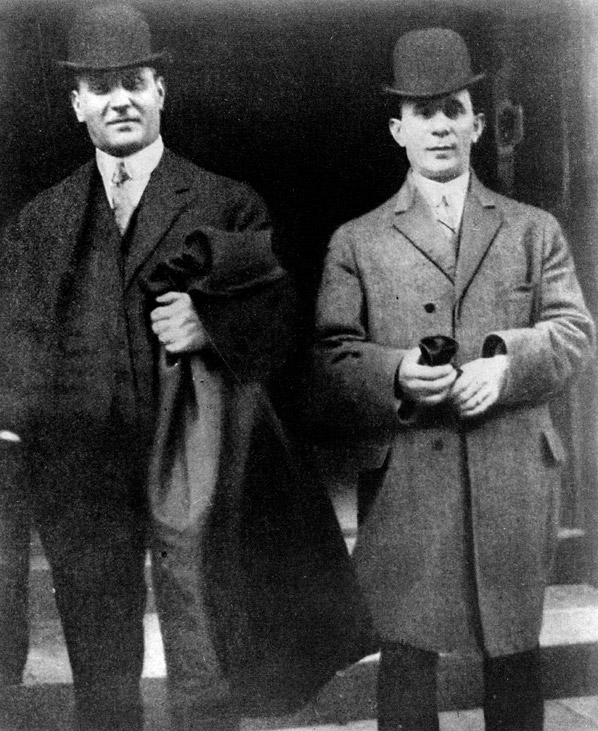
[Browns Brothers. Max Blanck and Isaac Harris, Cornell University, 1900s]